

Grocery Shopping
Most likely you have 3 grocery stores within 10 minutes of you. They will all have different sales on each week. Use Flipp.com and plan to buy at sale prices or in bulk. This can save you a substantial amount of money, especially if you’re buying for growing kids.
Meals & Meal Prep
Plan your meals for the week, or at least half of them to avoid having to make that last minute decision “what are we having for dinner tonight?”. Less eating out, take out, and less food waste.
Have 1 or 2 Veg-Based Meals
Include 1 or 2 vegetarian or vegetable-based meals in the week such as a pasta, chili, stir fry or homemade pizza.
1 Egg-Based Dinner
Eggs are a less expensive protein choice. Make one of your dinners an omelet, scramble or eggless quiche.
Make Your Own Food
Making a batch of muffins, cookies, granola or muesli instead of buying store-bought version will save you money. These things freeze really well too.
Frozen Fruit and Avocado Chunks
Make use of frozen fruit when fresh is not in season or on sale. You can also find frozen avocado chunks, frozen pomegranate seeds and other things you might like to add to your smoothie.
Recipe: Chicken Mexican Bowl

Here’s a simple recipe packed with the perfect balance of protein, fat, carbs, nutrients and taste. It's in our weekly rotation at home. We’re always changing up the flavours depending on what is in our kitchen.
This recipe is so versatile. Add some corn, red onions, hot sauce, adobo chilies, sour cream or pico de gallo. For Vegetarians, add crispy tofu or another type of bean to boost your protein.
Chicken Mexican Bowl
Makes: 2 Servings *double the recipe if you are making for your family.
Feel free to add peppers, hot peppers and any type of hot sauce to your bowl.
Ingredients
1/2 cup brown rice (1.5 cups cooked)
210 g (7.4 oz) chicken breast, boneless, skinless
1 dash chili powder
1 dash spices, cumin
1 dash salt
1/2 cup (4.9 oz) beans, black, canned, drained , rinsed well
1/2 fruit avocado, ripe
1 medium tomato, chopped
1 stalk green onion, tops only, chopped
2 tbsp cilantro (coriander), fresh, chopped
2 wedge lime, raw
Directions
Cook brown rice according to package.
Chop chicken. Heat non-stick pan and add a bit of oil. Cook chicken through so it is no longer pink.
Add chili, cumin and salt to the chicken. *You can also add it to the rice as well if you want.
Chop all vegetables and herbs.
Rinse black beans well. *You can use them straight out of the can or cook them by boiling them. It's your preference.
Find a shallow bowl. Add rice to the bottom. Top with chicken, avocado, beans and vegetables.
Sprinkle fresh cilantro and lime over all ingredients. Also add a dash of salt and any other herbs or hot sauce. Enjoy.
A Few of the Products I'm Using for Meal Prep this Week

Here a a few of the products in my kitchen right now:
Tazo Matcha Mate Grapefruit Green Tea - Love the taste of this one. Great for that 2pm pick me up, and its packed full of antioxidants.
Little Big Bread - Sprouted Grain Bread - Packed with Fibre. Low calories. Fills you up.
Individual Hummus Packages - Large hummus containers can go bad in my fridge. I love the little portable ones.
Menzetta Tamed Jalapeno Peppers - Brightens up a salad or wrap. I find them hot but not too hot.
Blue Diamond Nut Thins - Almond ones are great with just about anything. Pecan are more sweet.
Brianna’s French Dressing - I loved this for years then they stopped carrying in parts of Canada. It’s back and I’m so happy.
Liberte Greek Lemon 2% Yogurt - I buy the 4x100g containers. I’m a huge fan.
Frozen Pomegranate seeds. Add to oatmeal, smoothies, salads, and the kids lunch boxes.
Small Corn Tortillas (La Tortilla Factory) - You have to warm the tortilla in a pan first. I like to top them with a bit of refried beans, a bit of meat protein (chicken or steak), tbsp of cheddar, some tomatoes, lettuce, peppers with some green salsa and sour cream
Herdez Green Salsa - A great alternative to the traditional jarred salsas.
BOLD flavours - Olive Tapanade, Curry Spice (Try in Egg or Chicken Salad), Dill Pickle, Hot Sauce, Pink Grapefruit.
Pan-fried Panko Breadcrumbs. My husband discovered pan frying panko in some olive oil and sea salt. They have become a great topping for salads, soups, green beans, pasta dishes and marinara pizza.
Feeling Satiated

When you hear of being satiated or satisfied in regards to meals, you may think of being “full”. Feeling full is quite different than feeling satiated. You could eat a bag of Skinny Pop and you might feel full. But eat a few grapes with a slice of cheddar cheese and two seed crackers and you will feel satiated or satisfied.
Why is it important?
Taste and feeling satiated is important for both your physical and mental state. Understanding what satiates you can help avoid overeating, cravings, and help with weight control. I’ll use my husband as an example (I hope that’s okay hun).
When my husband wants to lose a couple of pounds he lowers the amount of food he eats (his portions) somewhat, but more significantly, he alters what snacks he eats. Instead of grabbing a sandwich, crackers or chips, etc I will find him eating a pickle, a turkey pepperoni or celery cream cheese and hot sauce. He will also eat smoked salmon and really enjoy it (my husband does not eat salmon usually). When I asked him why he just said “my body wants it”.
You can tell my husband moves towards salt, vinegar and umami tastes to feel satiated. So instead of getting these from high calorie and low nutrient food like chips and crackers he’s altered it to low calorie, high nutrient, very taste oriented foods.
Which taste profile are you drawn to?
Salty: Turkey pepperoni, slice of ham, slice of turkey, pickle, hot peppers, vegetables and hummus, vegetables and hot sauce, celery and peanut butter.
Sweet: Dried fruit with 10 almonds, yogurt with fruit, a prune, date, freeze some grapes and eat them frozen.
Fat: Nuts, hard-boiled egg, 1/4 avocado, smoked salmon, celery and peanut butter, slice of cheese and 1/2 apple.
A note on Salads: Most likely they aren’t satisfying because they don’t have the keys to make you satiated. You are one or two ingredients away from making that salad satisfying.
Try one or two these in your next salad:
Sliced pickle, 4 olives, a tbsp of Parmesan cheese, 1 Tbsp of dried fruits or nuts, green onion, dill, cilantro, grapes, apples, mandarin slices, lemon rind, strawberry, sea salt, black pepper, lemon juice, balsamic vinegar, lime juice, pomegranate seeds, sunflowers seeds, hemp hearts etc.
Try it out: Find what your body is craving. Instead of heading to your go-to snack or meal try to satisfy your craving with an alternative that has some of those key tastes that will satiate you ;)
Easy Tzatziki!
Tzatziki is made simply with yogurt, cucumber, olive oil, fresh herbs (usually mint or dill), garlic, lemon juice and salt. Nutritionally speaking, tzatziki is a creamy but light sauce. You can dollop it generously on your food without adding a lot of calories.

Recipe
Makes 2.5 cups
2 cups diced or grated cucumber
1 ½ cups plain Greek yogurt
2 tablespoons extra-virgin olive oil
2 tablespoons chopped fresh mint and/or dill
1 tablespoon lemon juice
1 medium clove garlic, pressed or minced
1/4 teaspoon fine sea salt
Preparation:
Working with one handful at a time, lightly squeeze the diced or grated cucumber between your palms over the sink to remove excess moisture. Transfer the squeezed cucumber to a serving bowl, and repeat with the remaining cucumber.
Add the yogurt, olive oil, herbs, lemon juice, garlic, and salt to the bowl, and stir to blend.
Let the mixture rest for 5 minutes or longer to allow the flavors to meld.
Taste and add additional chopped fresh herbs, lemon juice, and/or salt, if necessary.
Serve tzatziki immediately or chill for later. Leftover tzatziki keeps well, chilled, for about 4 days.
Tzatziki Nutrition & Yogurt Notes
Nutritionally speaking, tzatziki is a creamy but light sauce. You can dollop it generously on your food without adding a lot of calories. It’s a great dip for veggies too! I haven’t found a noticeable difference in texture whether I use whole-milk yogurt, low-fat or non-fat, so any of those will work. Greek yogurt is going to be thicker and higher in protein than regular yogurt.
The Best Fall Soup

I have to give my husband credit for this one. He makes the BEST soups. This one is so good it's become a part of our Thanksgiving (and Christmas) tradition - yet it's easy enough to make for a nutritious week night meal! So warm, so flavourful, and so easy to cook. Top it off with some olive oil and sea salt sourdough croutons. Mmmm, so good!
Butternut Squash Soup with Olive Oil & Sea Salt Croutons
6 Servings
I like to serve this soup with 4 or 5 croutons in the middle. Top the croutons with sour cream and chives and a bit more pepper.
Ingredients
1 medium squash, winter, butternut, raw
2 medium potato
1 medium onion, raw
2 tbsp butter
3 clove garlic, raw
3 cups (24 fl oz) chicken broth, ready to use, reduced salt, just enough to cover the veggies
1 dash black pepper
1 dash salt
1/2 tsp spices, paprika
1 leaf spices, bay leaf
1/2 cup, shredded (2.1 oz) cheddar cheese
6 tbsp sour cream
3 tbsp chives, raw
Directions
1. Heat and melt the butter in a medium pot, on medium heat.
2. Peel squash and take out the seeds and membrane. Chop it into small cubes.
3. Peel and chop potatoes and onion. Cut potatoes and butternut squash into cubes that are the same size. Add onion to the pot and saute until transparent.
4. Add potatoes, pressed (or minced) garlic, and butternut squash. Add paprika, salt, and pepper and saute for 5-10 minutes, stirring occasionally. Add just enough stock to cover the veggies. Cook until veggies are fully cooked and tender, about 20 minutes. (Time may vary depending on how small you cut potatoes and squash.)
5. Take out the bat leaf and discard. Slowly transfer content of the pot into a food processor, make sure to crack the lid to let the steam out. Blend well and return to the pot. When cheese is melted, soup is all done.
6. Serve with a dollop of soup cream, chives, and croutons.
Nutrition Facts
Per 1 Serving Calories 210 Total Fat 9.08g Saturated Fat 5.657g Trans Fat 0.223g Cholesterol 26mg Sodium 319mg Total Carbohydrate 27.81g Fibre 2.9g Sugar 4.12g Protein 6.84g Vitamin A 432 Vitamin C 37.7 Calcium 161 Iron 1.51
Sourdough Croutons
4 Servings
Ingredients
2 slice, sourdough bread, toasted
1 tbsp olive oil
1 dash sea salt
Directions
1. Cut sourdough slice into 8 or 10 pieces.
2. Put on parchment paper/baking sheet and drizzle with olive oil.
3. Put oven on 300 F.
4. After 10 or so minutes take it out of the oven and again drizzle it with olive oil. Put it back in the oven for 5 or so minutes.
5. Take croutons out and sprinkle with sea salt.
Enjoy :)
Dani
What you Need to Know about Vitamin D

Vitamin D is both a nutrient we eat and a hormone our bodies make. It is a fat-soluble vitamin that has long been known to help the body absorb and retain calcium and phosphorus; both are critical for building bone. Also, laboratory studies show that vitamin D can reduce cancer cell growth, help control infections and reduce inflammation. Many of the body’s organs and tissues have receptors for vitamin D, which suggest important roles beyond bone health, and scientists are actively investigating other possible functions.
How much Vitamin D do I need?

What foods have Vitamin D?
Vitamin D is not found in many foods; however, you can find vitamin D in:
Cow’s milk
Fortified soy and rice beverages
Fortified orange juice
Fatty fish like salmon and sardines
Margarine
Egg yolks
Fortified yogurts (check the label)
How do I know if I’m getting enough vitamin D?
Tips on getting vitamin D for infants
Infants who are fed only breastmilk should get a supplement of 400 IU of vitamin D everyday until they are 2 years old.
Infants who are fed breastmilk and formula should get a supplement of 400 IU of vitamin D everyday until they are 2 years old.
Infants who are fed only formula do not need a vitamin D supplement. The formula already provides enough.
Tips on getting vitamin D for children and adults
Fluid milk and fortified soy beverages are good sources of vitamin D. Speak to a dietitian or healthcare provider if you do not drink milk or fortified soy beverage. They can help you decide if you need a vitamin D supplement in addition to eating other vitamin D-rich foods.
Tips on getting vitamin D for adults 50 and over
Health Canada recommends that men and women over 50 take a daily vitamin D supplement of 400 IU.
Do I need a vitamin D supplement?
Children and adults who do not get enough vitamin D from foods or have low blood levels of vitamin D may need a supplement. Adults with osteopenia or osteoporosis may also need a vitamin D supplement. To find out your vitamin D levels, visit your doctor. A dietitian or your doctor can help you decide if you should take a supplement and how much to take.
Vitamin D supplements are sold over-the-counter as pills, chewable tablets or drops.
Do I need a vitamin D supplement if I’m vegetarian?
A well-planned vegan or vegetarian diet can include all the vitamin D you need. However, vegan or vegetarian children and adults who do not get enough vitamin D from foods or have low blood levels of vitamin D may need a vitamin D supplement.
Can I get vitamin D from sunlight?
Yes. During the spring and summer, your body can make vitamin D when your skin is exposed to the sun without sunscreen on. The amount of vitamin D that your body can make from sunlight also depends on your age, where you live and your skin tone. During the fall and winter in Canada, it is hard to get enough vitamin D. Do not depend on only sunshine to meet your vitamin D needs.
Is more vitamin D better?
No. Your total vitamin D intake should be below the maximum amount allowed per day. Find how much you need on the chart above.
Understanding Food Labels

Nutrition labelling became mandatory in Canada in 2007 on all prepackaged foods. Since then, nutrition and ingredient information has been listed on the food label. They have been designed to be easy to find, simple to read and to allow Canadians to make informed food choices.
How to use the Nutrition Facts table
Step 1: Look at the serving size
The serving size is at the top of the Nutrition Facts table. All the information in the Nutrition Facts table is based on this amount. Compare this to the amount of food you actually eat. For example, if the serving size listed is 1 cup but you ate 2 cups you need to double all the amounts listed.
Step 2: Look at the calories
The amount of calories is based on the serving size. If you usually have more than the serving size, your intake of calories will be higher than what is listed. If you eat less than the serving size, your intake will be lower.
Step 3: Look at the percent daily value (% DV)
The percent daily value (% DV) shows you if a food has a little or a lot of a nutrient.
5% DV or less is a little of a nutrient
15% DV or more is a lot of a nutrient
The % DV is meant to act as a benchmark to determine if that food is high or low in a certain nutrient. You can use it to compare the nutrient content of different foods.
Step 4: Try to get more of these nutrients
Fibre, vitamin A, vitamin C, iron, calcium
Step 5 : Try to get less of these nutrients
Fat, saturated fat, trans fat, sodium, cholesterol
Sometimes it is not as clear which food is the healthier choice. For example, one product might be low in fat but high in salt while another one may be high in fat but low in salt. The one you choose will depend on your specific needs and requirements. A dietitian can help you determine what to focus on and the amounts you should aim for.
The ingredient list
Ingredients are listed in order of weight. If sugar, fat or sodium is listed in the first few ingredients, the product may not be the healthiest choice. Use the list below to learn about words that mean sugar, fat or sodium in an ingredient list.
Words to watch for on the ingredient list
Sugar: Glucose, fructose, sucrose, maltose, lactose, galactose or dextrose Cane juice or evaporated cane juice Syrups and honey: agave, liquid invert sugar, maple syrup, corn syrup, molasses, barley malt syrup, brown rice syrup, palm syrup
Saturated Fat: Butter Coconut or coconut oil Lard, shortening, suet, chicken fat, bacon fat, tallow or beef fat Cocoa butter Palm or palm kernel oil Powdered whole milk solids
Trans Fat: Hydrogenated or partially hydrogenated fats and oils Margarine and shortening made with hydrogenated or partially hydrogenated fats or oils
Sodium/Salt: Sea salt, kosher salt etc Additives and preservatives with the word “sodium” such as: disodium phosphate, sodium bisulfate, sodium benzoate, sodium hydroxide, sodium propionate, etc. Monosodium glutamate (MSG) Baking powder, baking soda, sodium bicarbonate Garlic salt, onion salt, celery salt Soy sauce, fish sauce
Are Eggs Good For You?

Yes! Eggs are among the most nutritious foods on the planet.
Incredibly Nutritious
Eggs are pretty much the perfect food. They contain a little bit of almost every nutrient you need. 1 large egg has 77 calories, 6 grams of protein and 5 grams of healthy fats.
Eggs are a good source of: Vitamin A, Folate, Vitamin B5, Vitamin B12, Vitamin B2, Phosphorous, Selenium. Eggs also contain decent amounts of vitamin D, vitamin E, vitamin K, vitamin B6, calcium and zinc (to name a few).
If you can get your hands on pastured or omega-3 enriched eggs, these are even better. They contain higher amounts of omega-3 fat and are much higher in vitamin A and E.
Help with Weight Loss
Eggs score high on the satiety index, which measures the ability of foods to cause feelings of fullness and reduce later calorie intake.
Protein-packed
Eggs are an excellent source of protein. Eating enough protein can help with weight loss, increase muscle mass, lower blood pressure and optimize bone health, to name a few.
Excellent for Eyes
Contain the antioxidants lutein and zeaxanthin, and Vitamin D, 3 nutrients that have major benefits for eye health.
High in Cholesterol, but Don't Raise Blood Cholesterol (in most people)
It is true that eggs are high in cholesterol. In fact, a single egg contains 212 mg, which is over half of the recommended daily intake of 300 mg.
However, it's important to keep in mind that cholesterol in the diet doesn't necessarily raise cholesterol in the blood. There are number of dietary and genetic factors that affect blood cholesterol levels.
Eggs are a healthy choice for most people. The yolk is where the good stuff is so don’t eat just the whites. If you have high cholesterol, you may need to limit it to 4 egg (yolks) per week.
Scrambled Eggs with Spinach & Parmesan
Courtesy of: Bon Appetite
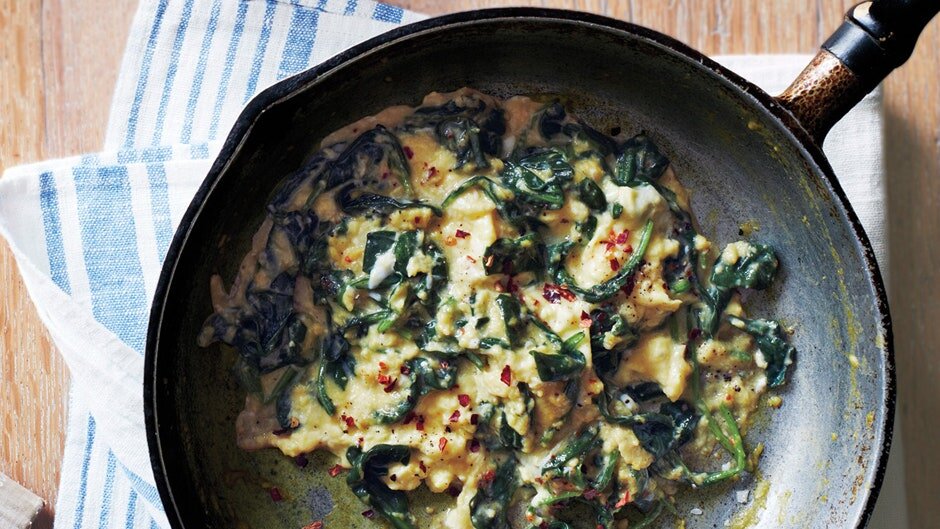
2 large eggs
Kosher salt and freshly ground black pepper 1 teaspoon olive oil
3 cups baby spinach
1–2 tablespoons grated Parmesan
Crushed red pepper flakes
Recipe Preparation
Whisk eggs in a small bowl; season with salt and pepper and set aside. Heat oil in a medium nonstick skillet over medium. Add spinach and cook, tossing, until wilted, about 1 minute. Add eggs; cook, stirring occasionally, until just set, about 1 minute. Stir in Parmesan. Sprinkle with red pepper flakes.
Calories (kcal) 270 Fat (g) 17 Saturated Fat (g) 6 Cholesterol (mg) 440 Carbohydrates (g) 10 Dietary Fiber (g) 3 Total Sugars (g) 0 Protein (g) 18 Sodium (mg) 910
Oven Fried Chicken, Crispy Potatoes and Spinach Strawberry Salad
Summer is great for grilling but on an overcast day this crispy chicken is a great option. Brining the chicken is key so be sure to watch the video or just look up “Judy Hesser’s Oven Fried Chicken” for this healthy alternative to fried chicken.
The first time I tried this chicken recipe with my family I was blown away by the crispiness of the chicken skin and the how moist the chicken was.
These three recipes stand up on their own but, putting oven fried chicken, roasted crispy potatoes and a strawberry salad with balsamic vinegar is a home run.